Objects of Desire
Coral, timber and glass: how the Maldives builds a house
From a coral-stone mosque of 1658 to a solar island and Aman’s private-island homes. No prices.

Photo Credit
Image courtesy of © Zairon · CC BY-SA 4.0 via Wikimedia CommonsWhat does a house look like in a country made of coral? For centuries the answer was the reef itself, cut and carved into mosques that still stand. Today it is a solar-powered ring of overwater homes, a Turrell skyspace and sixteen Aman houses each on an island of its own. Design only, no prices, checked against official pages in November 2026.
Built from the reef
Malé’s Hukuru Miskiy, the Old Friday Mosque, was completed in 1658 after two years’ work under Sultan Ibrahim Iskandar. Visit Maldives describes it as built entirely of interlocking coral blocks adorned with intricate carving, and inside it is known for its lacquer work and carved woodwork. For most of Maldivian history the building yard was the reef itself, which is the most local sourcing there is.
UNESCO, which has the Coral Stone Mosques of Maldives on its Tentative List, describes how blocks were cut from live coral while still soft and then air-dried, a craft it traces to the Buddhist period and which lasted until masonry arrived in the late 18th century. Hukuru Miskiy is a working mosque: dress modestly, avoid prayer times and ask before you enter.
Its finest island cousin is Fenfushi’s Friday Mosque in South Ari Atoll, built between 1692 and 1701, which UNESCO singles out for keeping every part of the ensemble: the mosque, a coral-stone bathing tank, wells, a sundial and a cemetery of finely carved tombstones. In Malé, the Grand Friday Mosque took over from Hukuru Miskiy in 1984 and, says Visit Maldives, is the largest mosque in the country.
An island, a house
The modern Maldivian house tends to be a resort that thinks like one. Kudadoo in Lhaviyani Atoll has 15 overwater residences, each with a 44 m² infinity plunge pool on its deck, designed by the architect Yuji Yamazaki, and calls itself the Maldives’ only fully solar-powered private island. The roof, in other words, earns its keep. Its service promise, “Anything. Anytime. Anywhere.”, is the floor plan in three words.
Patina Maldives on the Fari Islands sits on a 42-hectare island and treats art as part of the plan: its centrepiece is Skyspace Amarta by James Turrell, a minimalist room open to the sky. It is the rare building whose best feature is the part that was left out. The island also invites artists to stay and make work, among them Daniel Arsham, in residence in 2022.
The next houses
Amanolu, in Vaavu Atoll at the eastern edge of the archipelago, will be just 16 private-island Aman Residences, each a five-bedroom house on its own island of about 1.6 hectares. Aman names KHA, its longtime collaborator, as designer, and promises natural stone, pale timbers and woven fibres under pitched roofs, with high ceilings and glazing that disappears. It is scheduled to open in 2028.
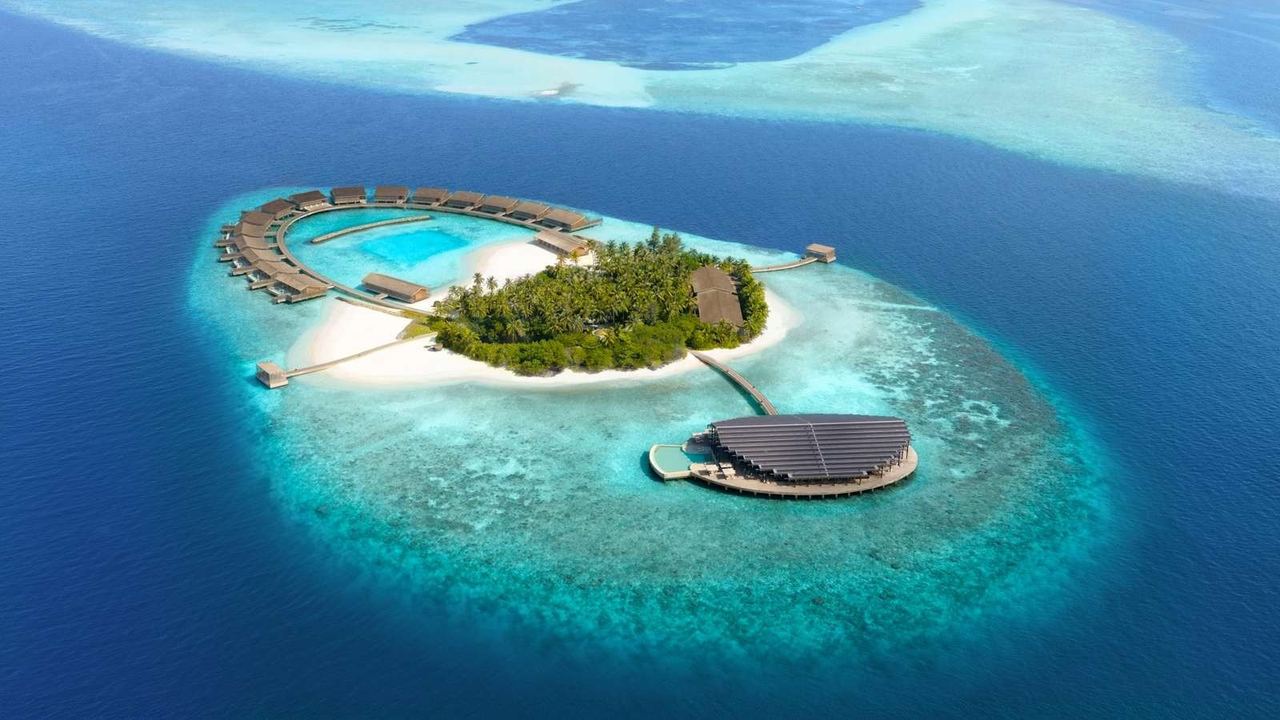
Photo Credit
Image courtesy of © Kudadoo MaldivesThe design brief reads like a lesson from the coral builders: let the climate decide the shape. Pitched roofs throw off the rain, high ceilings hold the heat away from the people, and the glass is meant to vanish rather than to show off. Three centuries on, the best Maldivian architecture is still mostly about the weather.
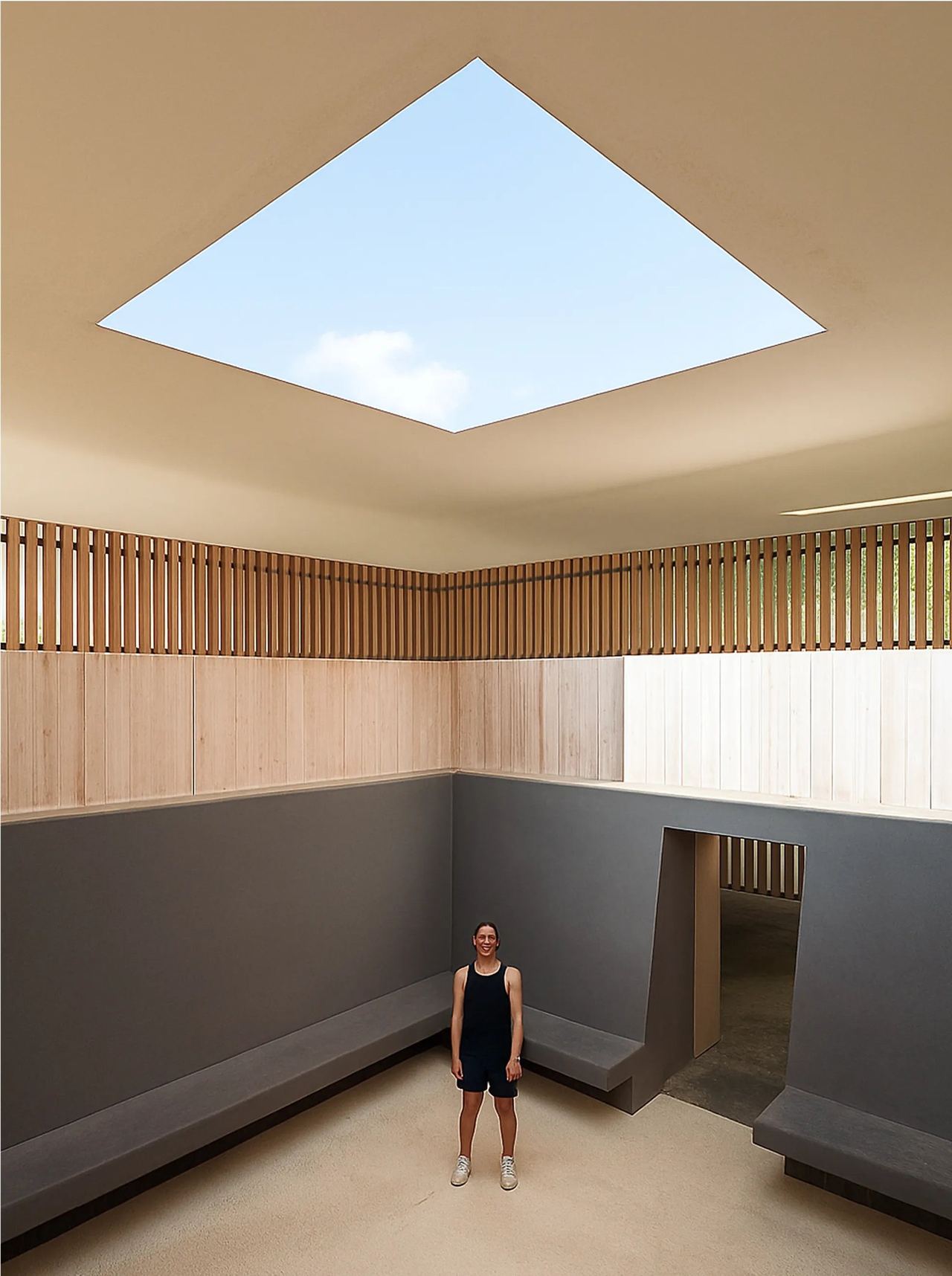
Photo Credit
Image courtesy of © Patina MaldivesIn South Malé Atoll, SIX & SIX Private Residences is a collection of just ten homes at two new resorts: beachfront and overwater residences at Rah Gili, beside what the developer calls the Maldives’ only dolphin sanctuary, and beachfront, overwater and private-island residences at Don Maaga. The pattern is clear: the Maldivian status symbol is no longer a bigger villa, but a smaller island with nobody else on it.
For most of Maldivian history the building yard was the reef itself, which is the most local sourcing there is.
What links the coral mosque and the solar island is restraint. A builder with only reef stone and timber learns to waste nothing, and an architect on a 1.6-hectare island learns the same lesson in a different century. The Maldivian house, old or new, is a lesson in fitting a great deal of comfort into very little land.
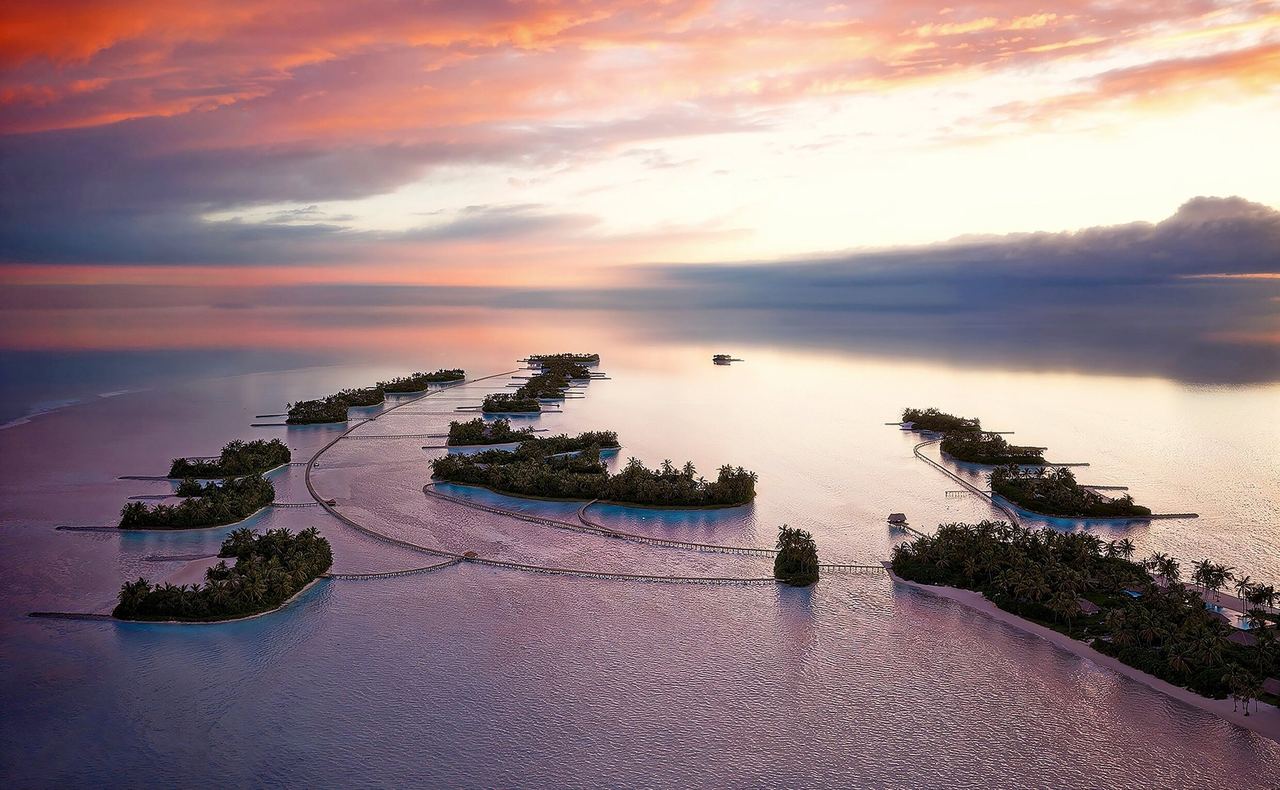
Photo Credit
Image courtesy of © Aman Residences, AmanoluOur advice: see the old craft before the new. Start at Hukuru Miskiy in Malé for the coral carving, then judge the new houses by how little they interrupt the view. Our Developments list follows each project by status; we never print property prices.
Why it's on our list
- Built from the reef
- An island, a house
- The next houses
Location
The map comes from Google Maps, which sets its own cookies once it loads.
More in depth
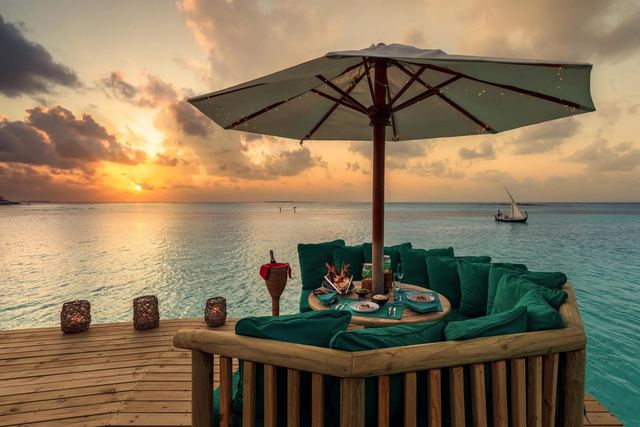 Objects of DesireA Piña Colada over the lagoon: the bar, the rules and the recipeThe IBA Piña Colada, why bars sit on resort islands, a two-hour champagne bar and a cellar below.
 Objects of DesireLess parked than crouched: the electric Jaguar and the new supercarsJaguar’s Type 00 and Type 01, Ferrari’s first electric car and the record-breakers around them.
 Objects of DesireFloats, not tyres: the seaplanes and yachts of the Maldives68 Twin Otters, the largest seaplane terminal, a private eight-seat plane and a 23-metre yacht.